The choices we make about how we spend our time don’t just speak to what we value, but often more about the habits and routines we’ve developed. Time is scarcest of resources and yet we often waste it on frivolous things. Can we calculate return on time so we understand the tradeoffs? Our actions are based on three primary motivations
- We are obligated to – if we don’t we get in trouble – Fear of repercussion
- We like to – this is intrinsic motivation in the activity – Joy of activity
- We don’t think – these are automatic motions – things we do without much thought – Habit and formation
The last category is the most wasteful, but likely eats up many hours in our day – flipping on the television, surfing the web (I just procrastinated for 40 minutes writing this post on irrelevant content), looking through unimportant emails amongst others etc.
So what would we measure? Below is how I would think about return on time.
- Impact / Outcomes:
- Pleasure
- Financial gain
- Recognition
- Building relationships
- Improving our health
- Effort / Energy
- Physical
- Financial
- Mental
- Time Value
- The value we place on the time
I’d visualize it something like this:
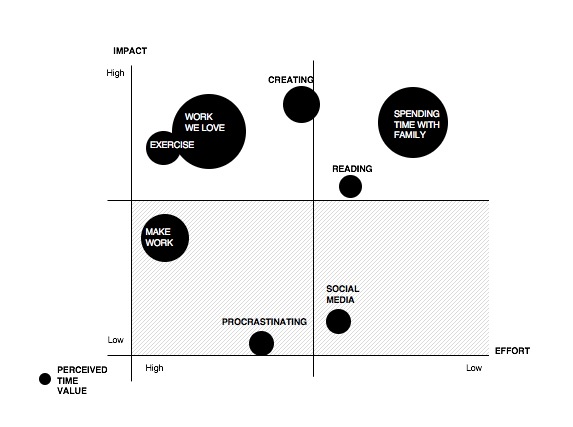
It’s an interesting exercise to go through to plot how we spend our time. If we approached all of our actions with this kind of evaluation, I wonder how it would change our decisions. What would your matrix look like?
 The Objective Co